
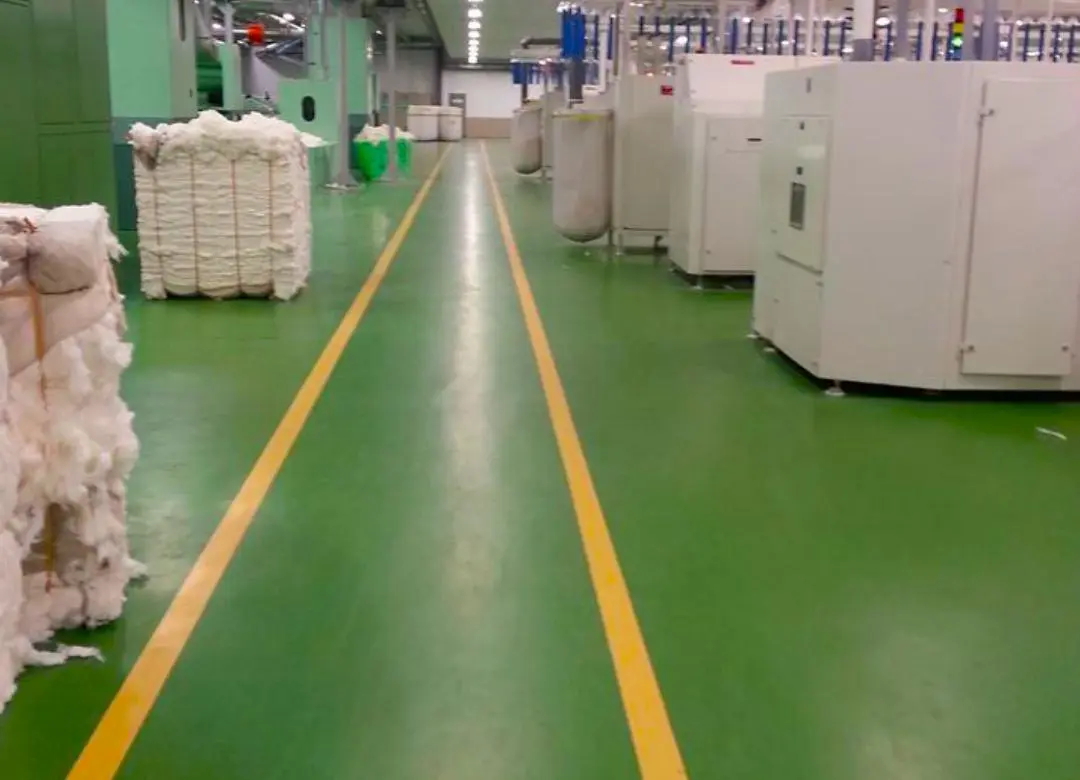
“What is the epoxy flooring price per square foot in Bangladesh?” is the first question almost every factory manager, showroom owner and homeowner asks us. It is also the hardest question to answer in one line, because epoxy is not a product you buy by the litre. It is a system you buy by the specification.
This guide explains exactly what you are paying for, which factors move the number up or down, and how to read two quotations side by side so you can tell a genuinely engineered floor from a thin coat of paint.
Why one single epoxy rate does not exist
Two floors can both be called epoxy and still differ in cost by five times. The difference sits in four places: total dry film thickness, resin chemistry, the amount of surface preparation your existing concrete needs, and the performance demand of the space. A retail showroom that only needs a dust-free glossy surface has nothing in common with a beverage bottling hall that faces forklift traffic, hot wash-down water and food acids every shift.
So instead of asking for a rate, describe the room: floor area, existing substrate condition, traffic type, chemical exposure, temperature, downtime available, and whether the space needs slip resistance or a hygienic coving detail. The rate follows the specification, never the other way around.
What actually goes into the price
1. System thickness
A roller-applied coating typically builds a few hundred microns. A self-levelling screed is usually 2 to 3 mm, and a heavy-duty polyurethane screed for industrial plants can be 4 to 9 mm. Material consumption rises almost linearly with thickness, and material is the largest single line item in any resin floor. This is the biggest reason quotes differ.
2. Substrate preparation
Mechanical preparation is not optional. Diamond grinding or shot blasting opens the concrete pores so the primer can key into the slab. If your existing floor carries oil contamination, laitance, old paint, cracks, honeycombing or a rising moisture problem, remedial work is added before a single drop of resin goes down. On old factory slabs, preparation and repair can be a surprisingly large share of project value, and skipping it is the number one cause of a floor peeling within a year.
3. Resin chemistry
Standard epoxy, solvent-free epoxy, novolac epoxy for aggressive chemicals, polyurethane for thermal shock and UV stability, conductive or anti-static systems, and decorative metallic or 3D systems all carry different raw material costs. Imported systems from established manufacturers also carry a different price to unbranded local blends, and a very different service life.
4. Site conditions and logistics
Working area size matters. Mobilising a crew and grinding equipment for 500 sft costs proportionally more per square foot than a 50,000 sft warehouse. Night work, phased handover inside a running factory, upper-floor material handling, locations far outside Dhaka, and power availability for grinders all feed into the final number.
5. Detailing
Coving at wall junctions, drain terminations, expansion joint treatment, anti-skid ramps, line marking and floor demarcation are priced separately in most professional quotations. In food and pharma plants these details are often what makes the floor pass an audit, so they are worth paying for.
Indicative rate bands and how to use them
Rather than quoting fixed figures that go stale within months, it helps to think in relative bands. From lowest to highest cost per square foot:
- Floor hardener and dust-proofer: the most economical option for warehouses that only need reduced dusting.
- Epoxy coating, two to three roller coats: entry-level protection for light traffic, showrooms, offices and storage.
- Polished concrete: mid range, with excellent lifecycle value where you want to keep the concrete look.
- Self-levelling epoxy screed: mid to upper range, the standard for garment units, electronics assembly and medium-duty production halls.
- Flake and decorative systems: mid to upper range depending on flake density and topcoat choice.
- Metallic and 3D epoxy: premium, driven by artistry and labour hours as much as by material.
- Heavy-duty PU screed: premium industrial band, justified where thermal shock, wet processing and aggressive chemicals exist.
- Conductive and ESD systems: premium, because of the copper grid, conductive primer and resistance testing requirement.
Resin prices move with exchange rates and freight, so any published number needs a date beside it. For a current figure against your actual drawings, ask for a site survey. It takes an hour and removes all the guesswork.
The hidden costs people forget
Downtime is usually the biggest unbudgeted expense. A 3 mm epoxy screed needs curing time before foot and vehicle traffic, and every extra stopped day has a cost. Fast-cure PU systems cost more per square foot but can pay for themselves by returning the area to service sooner.
The second forgotten cost is repeat work. A cheap coating over an unprepared slab will delaminate, and removing a failed floor costs more than doing it properly the first time. Judge on cost per year of service, not cost per square foot.
How to compare two quotations fairly
Ask every bidder to state in writing the manufacturer and product name of each layer, the total system thickness in millimetres, the preparation method, the number of coats, expected consumption per square metre, the curing schedule, and the warranty terms. If a quotation says only epoxy flooring at a certain rate per sft, it is not a quotation, it is a guess.
Also ask to see completed projects of similar duty. A supplier who can walk you across a five-year-old floor in a working factory is telling you more than any brochure can.
Get an exact figure for your floor
Elite Crete Bangladesh has been specifying and installing resin floors since 2007 as authorised applicators for Elite Crete USA, BASF, DUCON, VIACOR and PIDILITE. We survey the slab, check for moisture, recommend the lightest system that will actually survive your conditions, and give you a line-item quotation you can audit.
Explore the systems we install: Industrial Epoxy Flooring, Industrial PU Flooring, Metallic Epoxy Flooring, 3D Epoxy Flooring, Polished Concrete Flooring and Car Parking Garage Flooring.
Request a free site survey and detailed quotation
Frequently asked questions
Is epoxy flooring cheaper than tiles?
Installed cost per square foot is often comparable, but epoxy has no grout lines to crack or absorb contamination, and a seamless floor is far cheaper to clean and maintain across a decade of use.
Can I get epoxy flooring done in a small area such as a 200 sft room?
Yes, though the per-square-foot rate will be higher because mobilisation, equipment and minimum material pack sizes are fixed costs spread over a smaller area.
Do you work outside Dhaka?
Yes. We operate countrywide, including Gazipur, Narayanganj, Chattogram, Cumilla, Bogura, Khulna and the export processing zones.
How long will the floor last?
A correctly specified and properly installed system lasts many years. The deciding factors are substrate preparation, matching the chemistry to the exposure, and routine cleaning. Under-specification, not age, is what ends the life of most resin floors.